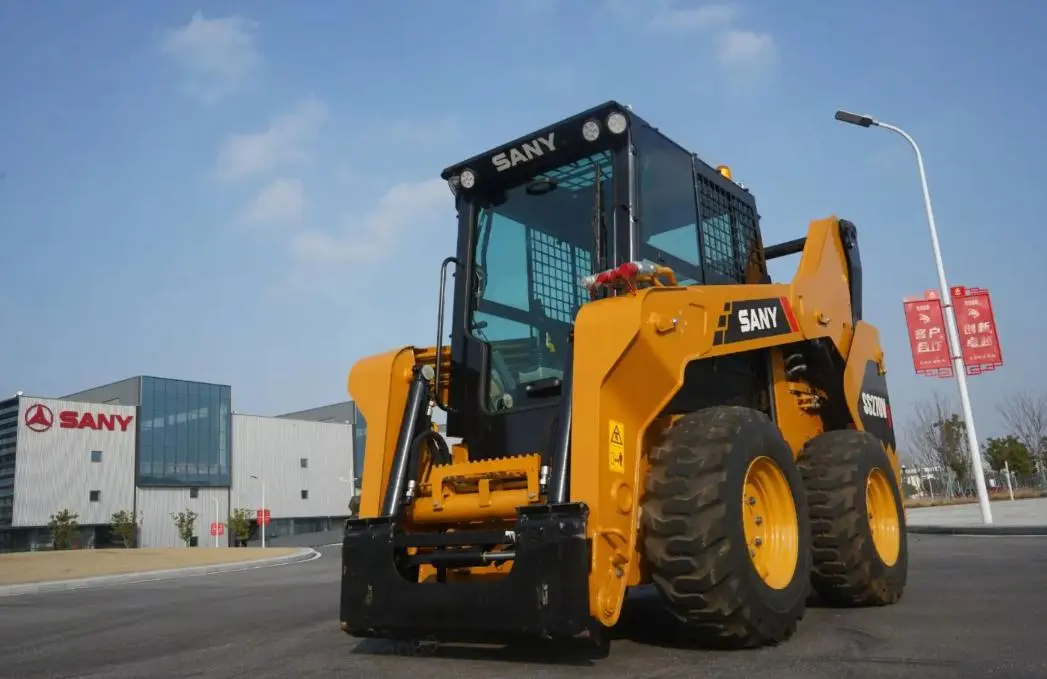

While working on a construction site, teams need to plan and work ahead of time, but still those plans only exist on paper. It is because access points change. Materials arrive at uneven intervals. Teams adjust their approach as the day progresses. In such conditions equipment must respond without hesitation. In such a situation, a skid steer loader fits into this environment with ease. It does not require wide movement space. It does not depend on a sequence where one machine must wait for another.
You often see this machine moving between small tasks that would otherwise slow the site down. It clears an area. Then it carries material. Then it returns to adjust levels. The operator does not step away or wait for assistance. That continuity creates a rhythm. Work feels steady rather than fragmented.
Compact Equipment in Restricted Work Areas
Many projects take place in areas where space is already limited. Urban construction offers little room for wide turns or large machine movement. Even on open sites certain sections remain tight due to structure or layout. Larger machines struggle in these conditions. They require clearance before they can operate properly. That preparation alone consumes time.
A compact machine approaches the problem differently. It works within the space that already exists. It turns without needing extra room. It moves closer to the work without disturbing nearby tasks. This creates a sense of control on site. Workers do not need to step aside every few minutes. The machine becomes part of the workflow rather than an obstacle within it.
Skid Steers Streamline Material Handling and Task Transitions
Material handling often seems simple at first glance. In practice it involves constant repetition. Soil moves from one point to another. Debris gets cleared. Fresh material takes its place. Each of these steps usually requires coordination between machines. That is where delays begin to appear.
A skid steer reduces this gap. The same machine lifts, carries, and places. Then returns for the next load. There is no pause between these steps. This creates a smoother flow across the site. You begin to notice fewer interruptions.
Attachments also play a role here. They allow the machine to take on slightly different tasks without leaving the work area. This does not feel like a major change when observed once. Over a full day it makes a clear difference. Small delays disappear and the overall pace improves.
Can Smaller Machines Deliver Consistent Output?
There is often a belief that larger machines produce better results under pressure. In some cases this holds true. Yet consistency depends on more than size. It depends on control and reliability. A compact machine performs well when used within its limits. It repeats the same task with steady output.
An experienced operator understands this balance. They do not force the machine beyond its capacity. Instead, they work with its strengths. The machine responds in a predictable manner. This predictability reduces mistakes. It also reduces the need for correction later. Over time this steady performance supports the overall progress of the site.
Efficient Ground Preparation Directly Impacts Downstream Work
Ground preparation rarely receives much attention. It often appears as a routine step before more visible work begins. In reality it shapes everything that follows. If the surface remains uneven or poorly arranged, the next stages become more difficult. Teams then spend time correcting issues that could have been avoided earlier.
A machine that can adjust levels carefully helps avoid this situation. It spreads material where needed. It removes excess where it should not remain. The result is a surface that supports further work without resistance. This may not stand out immediately. It becomes noticeable when later stages proceed without delay.
Skid Steers Supporting Workflows Without Interrupting Progress
Compaction requires a prepared surface. Without that preparation the process becomes inconsistent. A skid steer handles this early stage with attention to detail. It shapes the surface so that compaction can take place without repeated adjustments.
Once preparation ends, equipment such as a single drum roller takes over. The transition between these stages matters. If there is a gap, the surface may lose its condition. A steady handover keeps the process intact. The roller applies pressure on a surface that already meets the required level. This reduces the need for rework and keeps progress steady.
Crushers Transform Waste into Usable Material
Waste on a construction site does not always need removal. Much of it holds value when processed correctly. Crushing equipment allows this transformation to happen within the same working area. Broken material becomes useful again. It can serve as a base or fill where required.
This process feels practical when observed closely. Material moves from removal to reuse without leaving the site. There is no long pause between these stages. The workflow continues in a natural manner. This reduces both cost and delay. It also keeps the site organized since material does not accumulate without purpose.
Conclusion
Speed often appears as the main goal. In practice continuity holds greater value. A fast process that stops frequently loses its advantage. A steady process that continues without interruption achieves better results over time.
The role of a mobile crusher supports this idea. It keeps material processing within the same workflow. There is no need to pause and wait for external handling. The sequence remains intact from start to finish.
When work continues without unnecessary breaks, the site feels organized. Progress becomes visible in a consistent manner. This is where true efficiency takes shape.