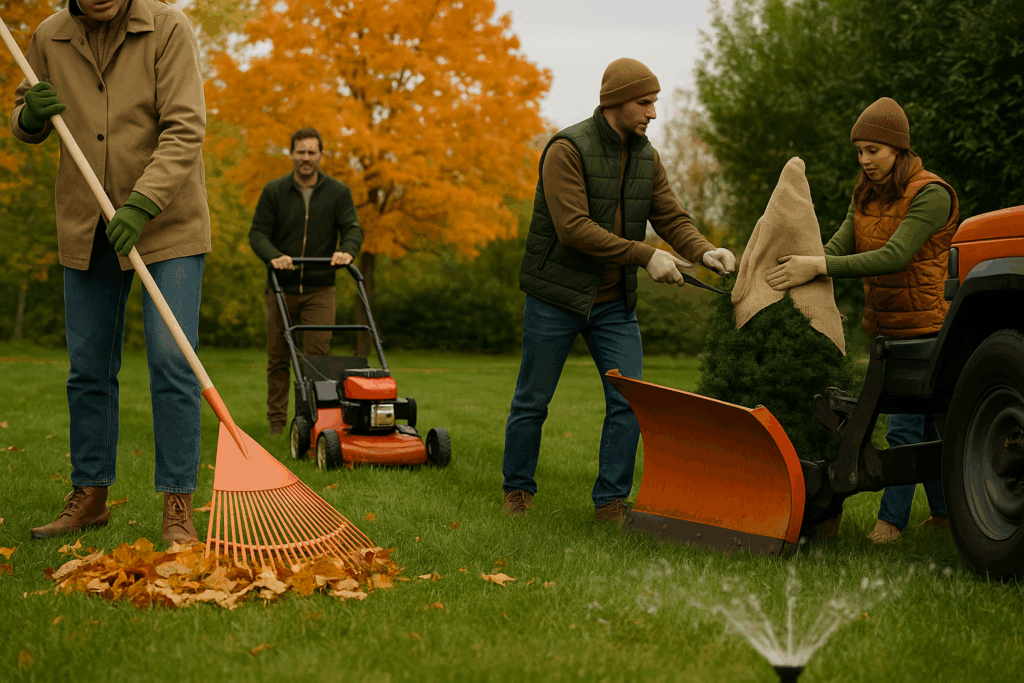

If you live in southern Alberta, you already know grass here behaves a little differently. The wind picks up without warning. Rain can be scarce for weeks, then show up all at once. Summers run hot and dry. Winters linger. Your yard feels it all. And if you ignore it for too long, it shows. In Lethbridge, Alberta, chinook winds and low annual rainfall, often around 350 mm per year, shape the way turf grows. You cannot treat it the same way you would in coastal B.C. or even parts of Ontario. The soil tends to dry out fast. Edges thin out first. Brown patches creep in quietly. I have seen homeowners water every evening and still struggle, simply because timing and mowing height were off by a bit. Good turf management here is practical. You cut at the right height, usually 2.5 to 3 inches. You water deeply, about 2.5 cm per week during peak heat, rather than a quick sprinkle every day. You sharpen mower blades at least twice each season. Small details matter. They stack up. At PROPERTY WERKS, mowing is not rushed. A clean, even cut reduces stress on the grass and helps roots grow stronger. It sounds basic, maybe too basic, but consistent mowing alone can change how your yard looks by mid July. You notice fewer weeds. The surface feels thicker under your feet. It is subtle at first. Then it is obvious. Your property deserves attention that fits local conditions. You do not need complicated routines. You need steady habits, adjusted for southern Alberta’s climate, and a team that shows up when they say they will. The rest follows from there.
Grass Maintenance in Southern Alberta Climate Conditions
Southern Alberta brings dry air, strong wind, and sharp temperature swings. Chinooks can push winter readings above 10°C for a few days, then cold snaps return. Summers are hot and often dry, with average rainfall around 350 mm per year, which is lower than many Canadian cities. Your turf feels that stress. Water deeply but less often, about 2.5 cm per week during peak heat. Early morning works best, before 9 a.m., so moisture soaks into the soil instead of evaporating. Cut at 7 to 8 cm in summer; longer blades shade the soil and slow moisture loss. I have seen yards turn thin by July simply because they were trimmed too short in June. Wind is another factor. It dries the top layer fast, sometimes within hours. You might think a quick evening sprinkle helps, but shallow watering trains roots to stay near the surface. Go deeper. Check with a screwdriver; if it slides 15 cm into the ground after irrigation, you are on track. Feed lightly in late spring and again in early fall, about 0.5 to 0.75 kg of nitrogen per 100 square metres each time. Avoid heavy feeding in mid summer, growth will surge and demand more moisture. Aerate once a year, usually September works well here, to relieve compaction from dry soil and foot traffic. PROPERTY WERKS handles regular mowing across the area, and consistent cuts matter more than people expect. Skip a week during peak growth and you will remove too much at once. Small adjustments through the season add up. That steady rhythm keeps your yard thick and steady, despite the weather shifting back and forth.
When to Start Spring Lawn Cleanup and Soil Preparation in Lethbridge
Spring in southern Alberta rarely follows a neat calendar. Snow can linger into March, then disappear fast once the chinook winds roll through. In this city, most yard cleanup begins sometime between late March and mid April. I usually tell clients to watch the ground, not the date. If the top two to three inches of soil are no longer frozen and you are not stepping into mud, it is time to get moving. Jumping in too early causes damage. Grass crowns stay soft after snow melt, and heavy foot traffic can leave ruts that show all season. You can test conditions with a simple screwdriver. Push it into the soil. If it slides in without much force and comes out clean, the ground is ready. If it hits frost or pulls up sticky clay, wait a few more days. Early cleanup focuses on clearing debris that built up over winter. Leaves, small branches, gravel from sidewalks, all of it blocks light and slows new growth. Rake lightly. Do not scrape. The goal is to lift material off the surface without tearing roots. If you see matted patches, a gentle pass with a spring rake usually loosens them enough for air to circulate again. Soil preparation matters just as much as surface cleanup. Southern Alberta soil often leans toward clay, and compaction is common after a long winter. If your yard feels hard underfoot, consider core aeration once the ground has dried slightly. Holes spaced every few inches allow oxygen and moisture to move downward. PROPERTY WERKS often schedules aeration in April because that timing lines up with steady daytime temperatures above 8 to 10 degrees Celsius. You can also check pH before adding anything. Many properties in this region sit around 7.5 to 8.0. A simple soil test kit gives you a baseline. If numbers are high, adding compost rather than lime makes more sense. Spread a thin layer, about one quarter to one half inch, and work it in gently with a rake. It sounds basic, but it changes how water moves through the root zone. Fertilizer timing is another piece people rush. Wait until you see active growth. That usually means grass blades reaching at least five to seven centimetres. Applying product too soon wastes nutrients because roots are not fully active. A slow release blend works well in this climate. One application in late April often carries turf through early summer without pushing weak, rapid growth. Moisture is unpredictable here. Some springs are dry and windy, others bring steady rain. Keep an eye on weekly totals. If rainfall stays below 15 millimetres per week, light irrigation may help new shoots establish. Water in the morning, once or twice a week, rather than daily. Deep soaking encourages deeper roots, which you will appreciate in July. Every property behaves a bit differently. Shaded areas near fences warm up slower. South facing yards can be ready a full week earlier. Walk your site, look closely, and adjust your timing. If you prefer a consistent schedule without second guessing, a local mowing crew like PROPERTY WERKS can line up cleanup, aeration, and the first cut in a practical order. Spring work done at the right moment sets the tone for the entire season.
PROPERTY WERKS Contact Information:
Address
1017 1 Ave NE, Calgary, AB T2E 0C9
Phone
403 239-1269
Website
Hours of operation
Monday 9 a.m.–5 p.m. Tuesday 9 a.m.–5 p.m. Wednesday 9 a.m.–5 p.m. Thursday 9 a.m.–5 p.m. Friday 9 a.m.–5 p.m. Saturday 9 a.m.–5 p.m. Sunday Closed Online service – Open 24 Hours / 7 days
Map
<iframe style=”border: 0;” src=”https://www.google.com/maps/embed?pb=!1m18!1m12!1m3!1d40139.69404320274!2d-114.06773931793518!3d51.039591102996!2m3!1f0!2f0!3f0!3m2!1i1024!2i768!4f13.1!3m3!1m2!1s0x537167b52b721e11%3A0x38dbbe85e2a490be!2sPROPERTY%20WERKS!5e0!3m2!1sen!2sca!4v1740725330297!5m2!1sen!2sca” width=”600″ height=”450″ allowfullscreen=”allowfullscreen”></iframe>
<a title=”PROPERTY WERKS – Google Maps” href=”https://maps.app.goo.gl/nyh35jKycHWZSbvv7″>Get Directions</a>
Q&A:
When should I begin spring cleanup for my yard in Lethbridge?
In this part of Alberta, timing depends more on soil conditions than on the calendar. Most years, cleanup begins in late March or early April, once snow has melted and the ground is no longer frozen. If you walk across the grass and your boots sink into soft mud, wait a few days. Working on saturated soil can cause compaction and thin patches later. A simple check helps. Push a screwdriver into the ground. If it goes in easily and comes out without frozen chunks attached, you are likely good to proceed with light raking and debris removal.
Is overseeding necessary every year, or only when the grass looks thin?
Overseeding is not always required annually, but many properties here benefit from it every two to three years. Wind, dry spells, and heavy use from kids or pets can thin turf over time. If you notice bare spots larger than a dinner plate or areas where soil shows through, overseeding in late spring or early fall helps fill them in. Choose a hardy cool season mix, often including Kentucky bluegrass and fescue. Apply seed to loosened soil, keep it moist for the first two weeks, and avoid heavy foot traffic. Consistent watering during germination makes a noticeable difference.
Why does my yard struggle near sidewalks and driveways?
Edges near concrete face extra stress. Heat reflects off hard surfaces and dries soil faster. In winter, salt and sand also build up along these borders. By spring, grass in these strips may look weak or sparse. Rinsing these areas thoroughly once temperatures rise can flush leftover salt deeper into the soil. You may also add a thin layer of compost to improve structure. Raising your mowing height slightly along edges helps shade the soil and reduce moisture loss. These small adjustments often improve those problem strips within one season.
How can I reduce weeds without harming the rest of my grass?
Healthy, dense turf is your first defence. Mow at a height of about 7 centimetres to shade out weed seedlings. Water deeply but not too often, around once or twice per week during dry periods, applying roughly 25 millimetres each time. Hand pulling works well for isolated broadleaf weeds such as dandelions, especially after rain when roots slide out more easily. If weeds spread across larger sections, a selective herbicide approved for use in Alberta may help. Follow label instructions carefully and apply during calm weather to avoid drift. Strong, well fed grass competes better and leaves fewer openings for unwanted growth.